Shrink sleeve labels for shaped bottles need more than an attractive flat design. A curved shoulder, narrow waist or changing cross-section affects how the sleeve sits on the container and how the graphics look after shrinking. This guide explains what to review before printing, how the sleeves are produced, and what to check on the actual bottle before approving a repeat order.
Why bottle shape matters
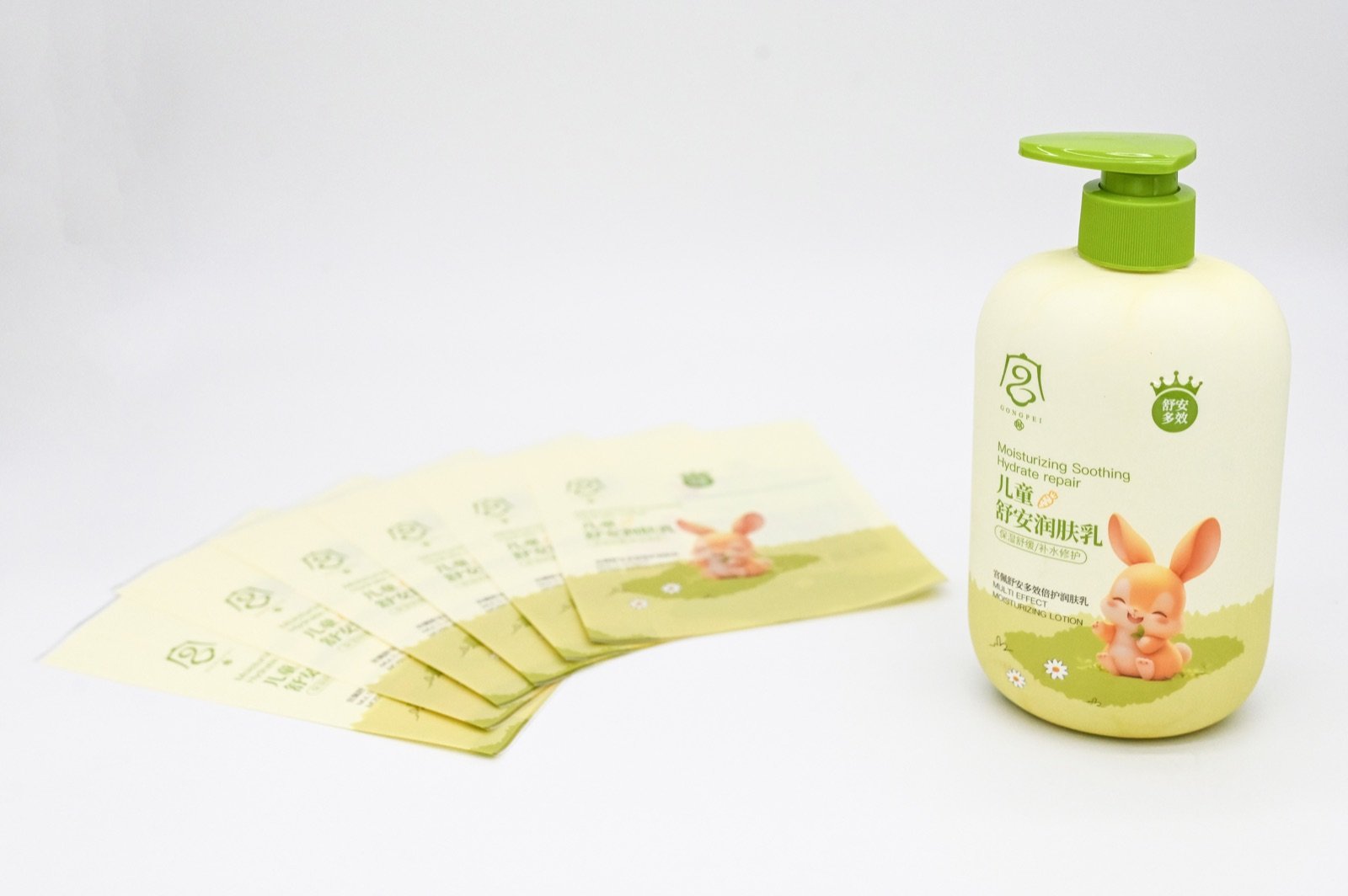
A straight cylindrical bottle and a contoured bottle should not automatically share the same sleeve specification. The sleeve must pass over the relevant widest section during application, then conform to the intended label area. Shoulders, recessed waists and abrupt changes in shape need individual assessment; heat-shrink film is not a guarantee that every geometry can be covered successfully.
First decide where the label should start and finish. Full-body shrink sleeves offer broad decoration coverage, while partial sleeves cover a selected section. Keep pumps, closures and functional openings clear unless the project specifically includes an approved closure-covering feature.
Confirm the container and film before final artwork
Provide front, side and back photographs, a dimensioned drawing where available, and preferably a physical container sample. Record the intended sleeve height and the dimensions around changes in bottle shape. Capacity alone does not define sleeve size. Our container measurement guide explains the information to prepare.
Haosen produces custom PET and PVC shrink sleeve labels. The exact film grade, thickness and shrink behaviour must be confirmed for the container and application conditions. Do not select material solely by price or assume one film specification works on every shaped bottle. Share the container material and the intended application equipment so the production team can review suitability.
Plan graphics, the seam and important information
Graphics can change shape as the film contracts around a contoured container. Review whether artwork compensation is needed before production; a flat proof alone cannot establish the final appearance. Place important text, logos and barcodes with the finished bottle in mind, and agree the seam location so it does not interfere with the main display panel.
The printer should confirm the production layout and seam area before the designer releases final files. Keep a clearly identified approved artwork version. After a bottle trial, review legibility and barcode scanning on the finished sample rather than relying only on the original digital artwork.
How custom shrink sleeves are produced
- Specification and file approval: confirm the bottle, coverage, film, dimensions, artwork version, quantity and supply format.
- Printing: print the approved design on the confirmed shrink film. Haosen has gravure and digital printing equipment; the production route is agreed for the order.
- Slitting: prepare the printed film to the specified working width for subsequent processing.
- Seaming: join the film into a sleeve tube and check the agreed layflat width and seam condition.
- Inspection: check print appearance, registration and finishing against the approved requirements. Inspection points also apply during production, not only at the end.
- Cutting or roll preparation: prepare individual sleeves or rolls according to the application method. For rolls, confirm winding direction, core size and permitted roll dimensions with the applicator.
These are label-manufacturing stages. Applying the sleeve and shrinking it onto a filled or empty container is a separate packaging operation. Application conditions must be agreed with the party operating the shrink equipment.
Test the actual bottle before approving the result
Arrange a trial using the intended container and representative application conditions. Review sleeve positioning, shoulder and waist appearance, wrinkles, seam integrity, graphic distortion and readable information. A successful trial on one bottle does not validate a different bottle shape or a different application setup.
If the result is unsatisfactory, review the film specification, sleeve dimensions, artwork and application conditions together. Avoid treating more heat as a universal correction. Record the accepted sample and agreed settings so subsequent production has a clear reference.
What to send for a quotation
- Complete bottle photographs, dimensions and sample availability.
- Container material and required label coverage.
- Editable artwork or the current design status.
- Quantity for each design and preferred film, if known.
- Manual or automatic application, cut sleeves or rolls, and equipment requirements.
- Destination country and required delivery timing.
Unknown specifications can be marked for technical confirmation. Our reference production period is 5–15 days after artwork and specifications are approved, subject to order confirmation; transportation time is separate.
Discuss your shaped bottle project
Explore our custom shrink sleeve labels or view the shaped personal care bottle case study for a finished-product example.
Send your bottle details for a custom quotation. You can also email sales@haosenpack.com or contact WhatsApp at +86 189 2692 9937.
Technical background: Cambridge Label — Shrink Sleeve Technical Guide, covering sleeve application, layflat size and artwork distortion. Project-specific specifications require separate confirmation.