HAOSEN PACKAGING · BUYER’S GUIDE
The right shrink sleeve supply format starts with one practical question: who will put the sleeves onto your containers, and how? A printed sleeve supplied on a roll and an individually cut sleeve can serve different application workflows. Before comparing quotations, agree the format with the bottle factory, co-packer or team that will apply it.
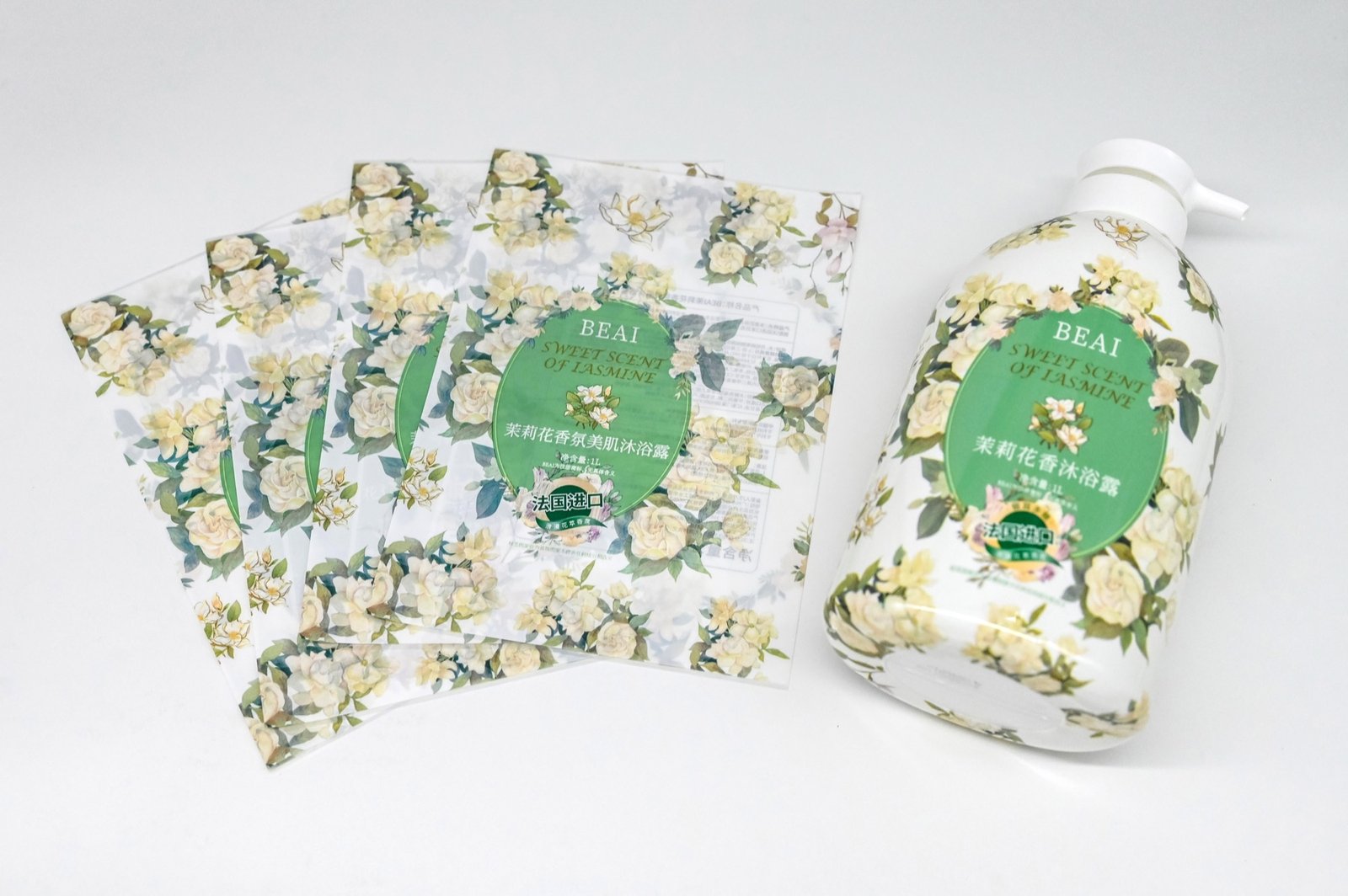
What is the difference between rolls and pre-cut sleeves?
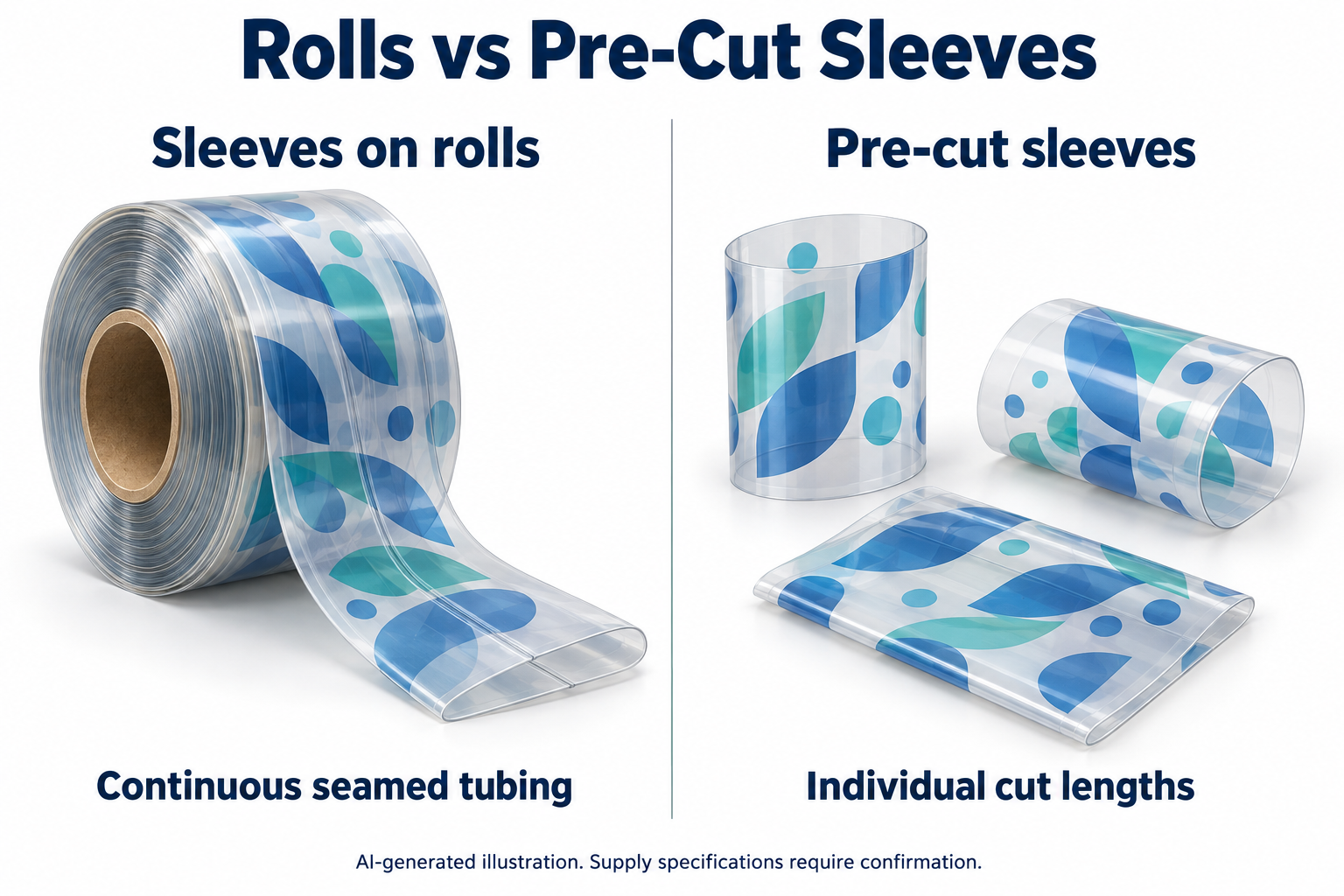
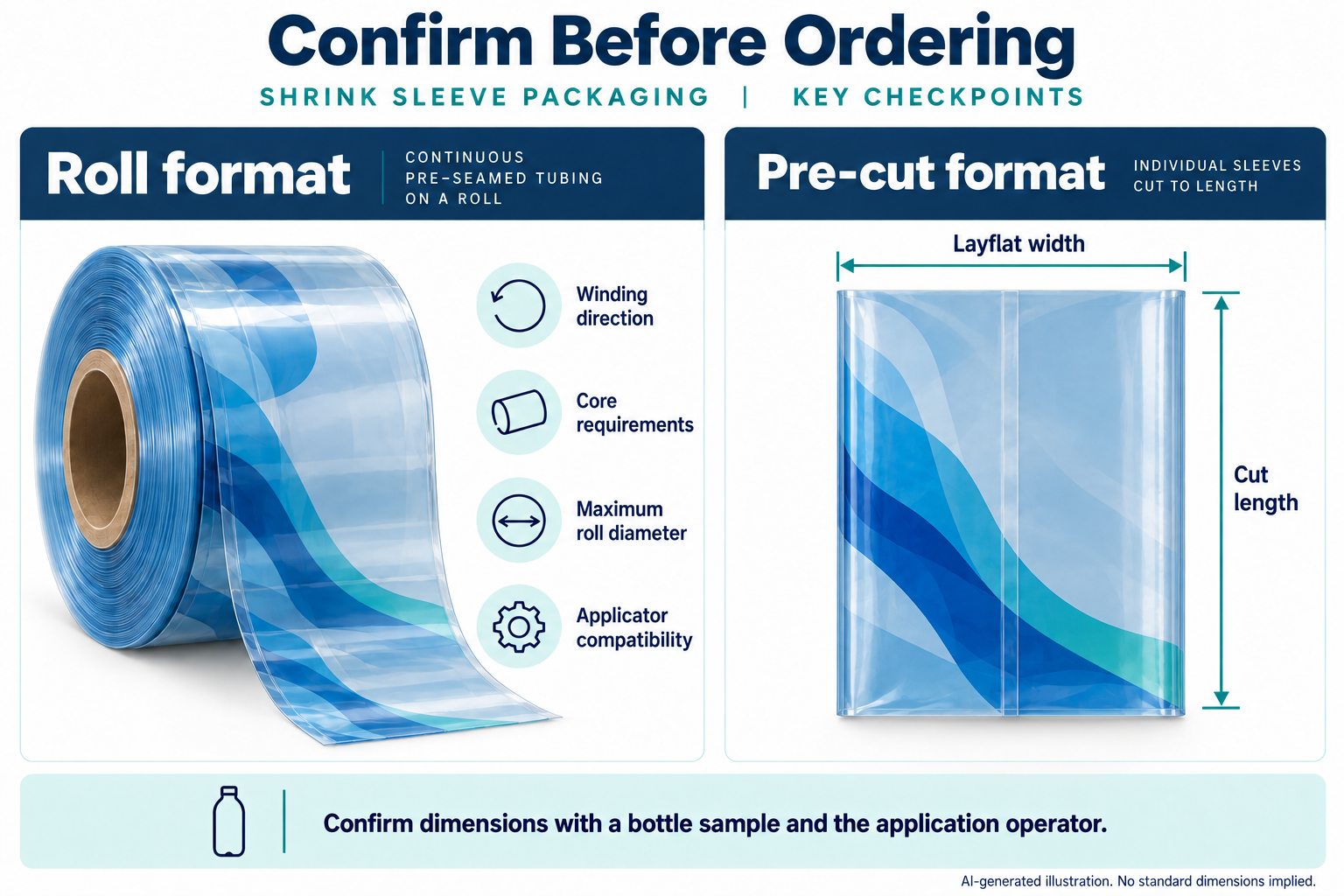
Sleeves on rolls
Continuous, seamed sleeve tubing is supplied on a reel for a compatible sleeve applicator, which cuts and places each sleeve. Confirm the required reel configuration with the equipment operator before production.
Pre-cut sleeves
Seamed tubing is cut into individual lengths before delivery. These sleeves are commonly used for hand placement, trials or workflows designed for individual sleeves. They still require the agreed shrinking process after placement.
Terminology matters: this guide compares pre-seamed shrink sleeves supplied on reels with individually cut sleeves. It does not describe flat wrap-around labels or every technology called “roll-fed labeling.” Send an equipment model or a short application video if the terminology is unclear.
Which format matches your operation?
| Question | Sleeves on rolls | Pre-cut sleeves |
|---|---|---|
| How are sleeves placed? | By a compatible reel-fed sleeve applicator. | Commonly by hand; other arrangements require equipment confirmation. |
| What needs checking? | Layflat width, repeat/cut requirements, winding direction, core and roll limits. | Layflat width, cut length, opening/handling and packing requirements. |
| What happens after placement? | The sleeve is shrunk using a validated process suitable for the film and container. | |
| What should drive the choice? | Actual equipment, labour, trial results and total applied cost—not order quantity alone. | |
A large order does not automatically mean rolls are suitable. A smaller order does not automatically require cut sleeves. Ask the party running your packaging line what it can handle reliably.
Printing, sleeve conversion and bottle application are separate steps
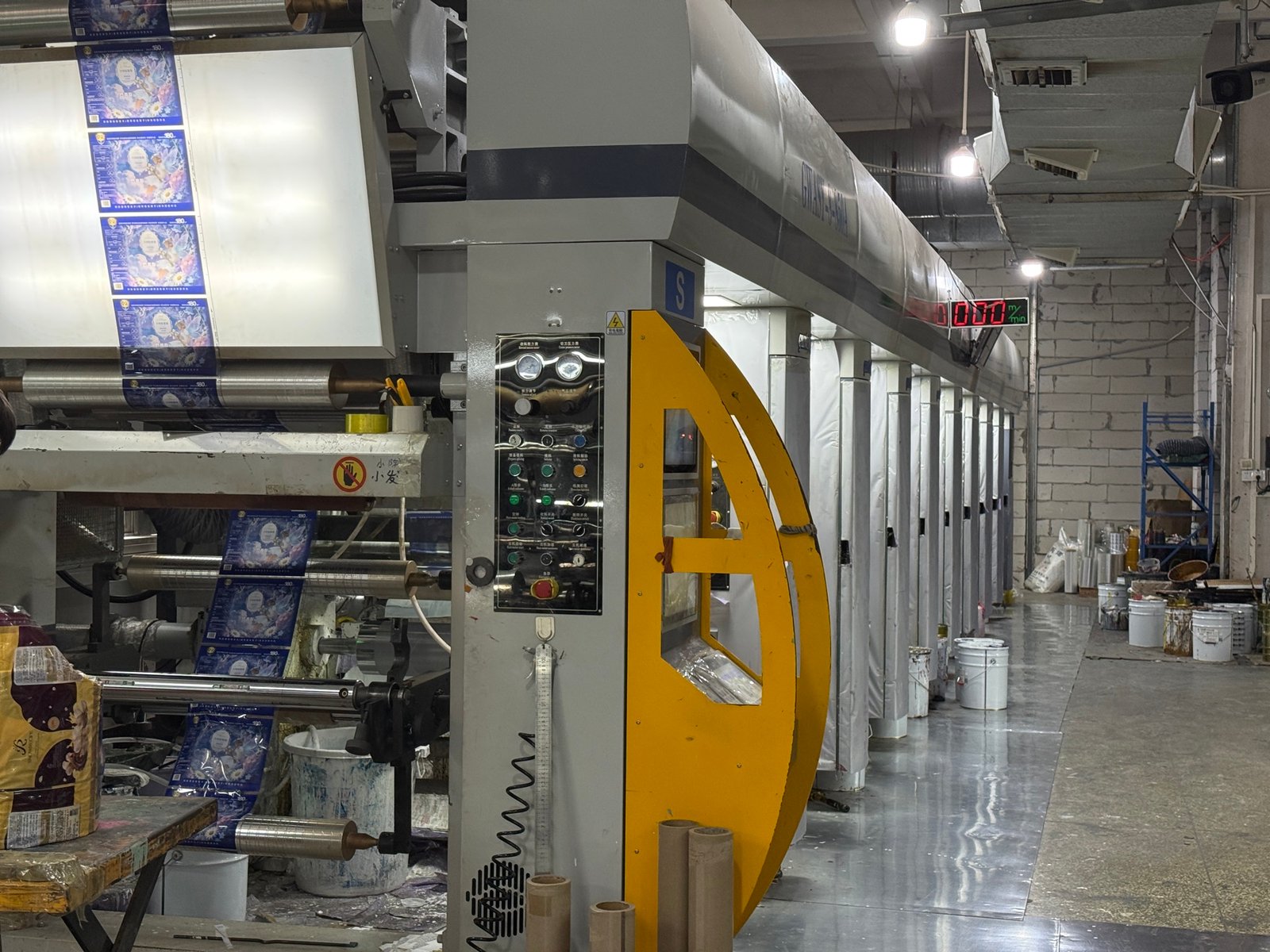
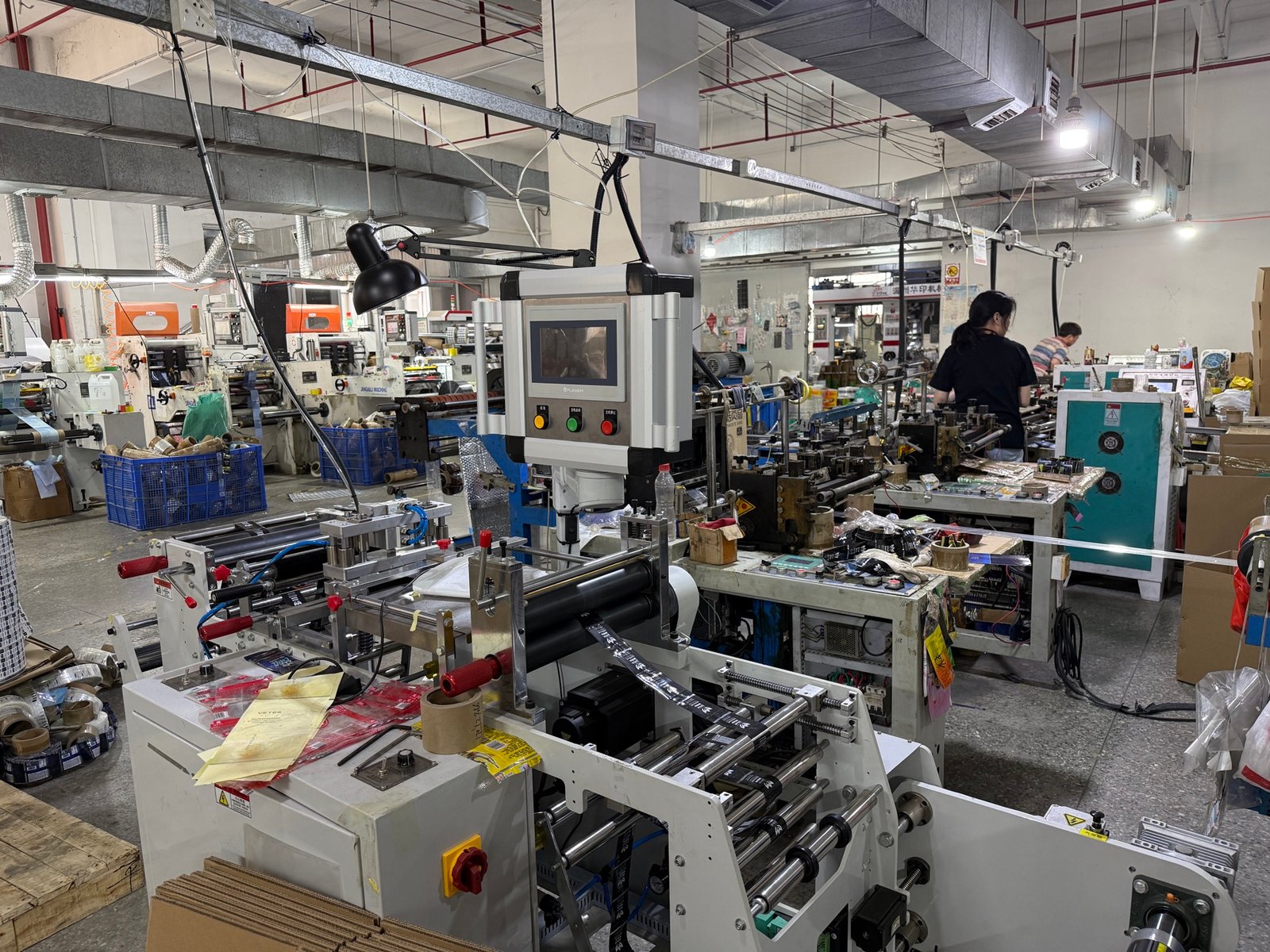
For a pre-seamed sleeve workflow, printed film is converted into sleeve tubing and finished in the agreed roll or cut format. Applying that sleeve to a container and shrinking it are later operations. The exact production and inspection sequence should be confirmed for the job.
Keep quotations clear by separating printed sleeves, bottle application, cartons and freight. Do not assume that a label price includes placing and shrinking sleeves onto bottles. Any application service must be agreed separately with the responsible party.
What should you send before requesting a quote?
- Container information: photographs, a dimensioned drawing and, where possible, a physical sample. Bottle capacity alone is not enough to determine sleeve size.
- Coverage: show where the sleeve should start and finish, and whether the shoulder, neck or cap must remain uncovered.
- Application method: identify the bottle factory or co-packer, manual or machine placement, equipment model and shrinking process.
- Format specifications: provide the operator’s roll requirements or the proposed individual cut dimensions. If unknown, request a joint review rather than guessing.
- Quantity by artwork: list each SKU separately. State whether “100,000 units” means total sleeves, units per design or cartons.
- Artwork and material: send the editable design and any existing sleeve sample. Film type, thickness and fit remain subject to technical confirmation.
- Destination and timing: provide the receiving address and required arrival date, not only a requested production date.
For material discussions, see our PET shrink sleeve labels and PVC shrink sleeve labels pages. Material selection and supply format are separate decisions.
Delivery to a bottle factory or directly overseas?
If sleeves will be applied at a bottle factory in China, confirm its receiving contact, address and application requirements. If sleeves are sent overseas, confirm that the receiving facility can apply the chosen format. Shipping loose sleeves is not the same scope as shipping decorated bottles.
Request separate freight options against a clearly defined package: sleeves only, sleeves plus cartons, or another agreed scope. Carton quantity should be stated explicitly rather than inferred from bottle quantity.
Frequently asked questions
Are pre-cut sleeves self-adhesive labels?
No. Cutting a shrink sleeve into an individual length does not turn it into a pressure-sensitive sticker. Confirm placement and shrinking with your packer.
Can I switch formats without checking anything else?
Do not assume so. The applicator’s feed and cut requirements may affect the specification. Review the change with both the sleeve supplier and operator, then validate a representative sample.
Which option is cheaper?
Compare the total applied cost: printing and finishing, setup, handling, application labour, trial waste and freight. There is no reliable universal saving percentage.
Should I approve a sample first?
Yes—agree what the sample represents, and test it on the intended process where required. Use our sample approval checklist to record the decision.
Not sure which format to request?
Send Haosen Packaging your bottle photos, artwork, quantities per design and application details. We will review the requirements and confirm the supply specification before quoting.
Request a shrink sleeve quotation →
Email: sales@haosenpack.com
WhatsApp: +86 189 2692 9937