Choosing a film is one of the most important technical decisions in a custom shrink sleeve project. PETG and PVC are both widely used for printed shrink sleeve labels, but they do not behave in exactly the same way during printing, seaming, application, shrinking, storage, or recycling.
The right choice is not simply the film with the highest shrinkage or the lowest unit price. It depends on the container profile, required sleeve coverage, shrink tunnel, packing line, destination market, appearance expectations, and end-of-life requirements.
This guide explains the main differences between PETG and PVC so packaging buyers can prepare better information before requesting a quotation. Film grades vary by manufacturer, so the final material specification and shrink trial should always be confirmed with the label converter using the actual production container.
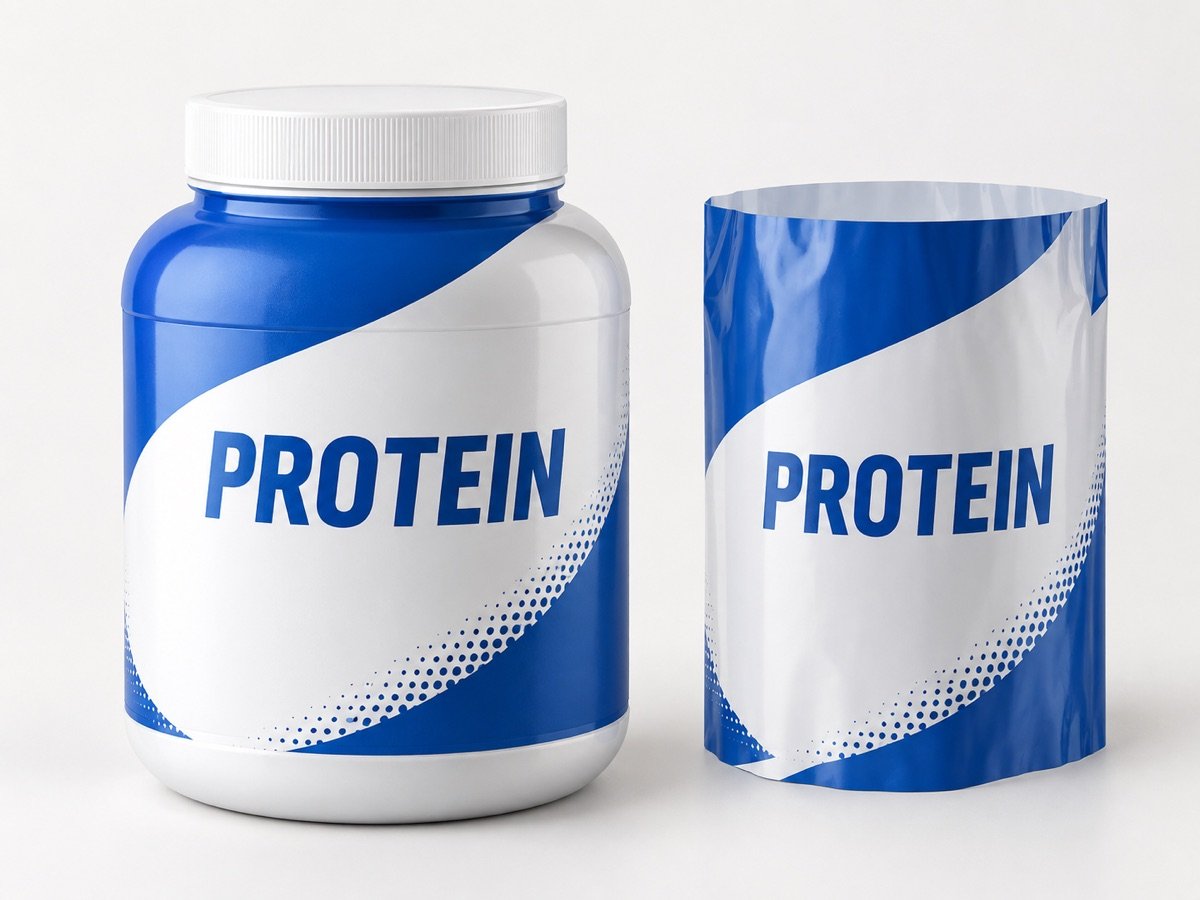
Printed shrink sleeve samples and a finished container demonstrate how the flat sleeve conforms to the final package.
What Are PETG and PVC Shrink Sleeve Films?
PETG is a glycol-modified copolyester film. It is known for clarity, printability, toughness, and the availability of grades designed for medium- to high-shrink applications. PETG is often considered for bottles with pronounced shoulders, narrow necks, curved panels, or other demanding shapes.
PVC is a polyvinyl chloride film with a long history in shrink sleeve labeling. It is available in multiple shrink profiles and is commonly used for straightforward containers, promotional sleeves, multipacks, and tamper-evident applications. Its relatively forgiving processing window can suit many established production lines.
Both materials can support high-quality 360-degree graphics. Neither should be selected from the polymer name alone: film thickness, shrink curve, transverse-direction shrinkage, machine-direction behavior, seaming system, ink system, and tunnel conditions all affect the finished result.
Quick Comparison: PETG vs. PVC
| Decision factor | PETG | PVC |
|---|---|---|
| Typical use | Medium- to high-shrink applications and more demanding container contours | Straightforward to moderately shaped containers, promotional sleeves and tamper-evident bands |
| Appearance | High clarity, gloss and strong graphic presentation | Good clarity and print appearance, depending on grade and finish |
| Shrink behavior | Grades are available for demanding shapes and higher shrink requirements | Broad range of established shrink profiles; often forgiving on conventional applications |
| Process sensitivity | Requires suitable tunnel control and correct film orientation | Often has a wider processing window, but still requires controlled application conditions |
| Toughness | Generally good toughness and resistance to handling damage | Performance depends on grade, thickness and formulation |
| Cost | Often higher than conventional PVC, subject to grade and market | Often cost-competitive for established applications |
| Recycling considerations | Conventional PETG sleeves may still create challenges in PET recycling; recycling-compatible PET-based grades are also available | PVC can be problematic in PET recycling streams and may face market or customer restrictions |
| Best selection method | Confirm with container measurements, film data and a shrink test | Confirm with container measurements, film data and a shrink test |
This table is a purchasing reference, not a production specification. Actual performance must be checked against the selected film grade and equipment.
1. Match the Film to the Container Shape
Container geometry should be the first consideration. A nearly cylindrical bottle with limited diameter change usually requires less shrink than a bottle with a wide body, steep shoulder, narrow neck, recessed grip, or sculpted surface.
PETG is frequently evaluated for demanding shapes because suitable grades can provide the shrink response needed to conform around larger changes in circumference. However, a high-shrink film is not automatically the best choice. Excessive or uneven shrink energy can contribute to graphic distortion, edge movement, smiling, frowning, or wrinkling if the sleeve design and tunnel settings are not matched correctly.
PVC remains a practical option for many simple and moderately contoured packages, especially where an existing line is already validated for a specific PVC grade. For either material, provide front, side, top, and bottom photographs together with measurements at several heights. Our guide on how to measure a container for custom shrink sleeve labels explains the required data.
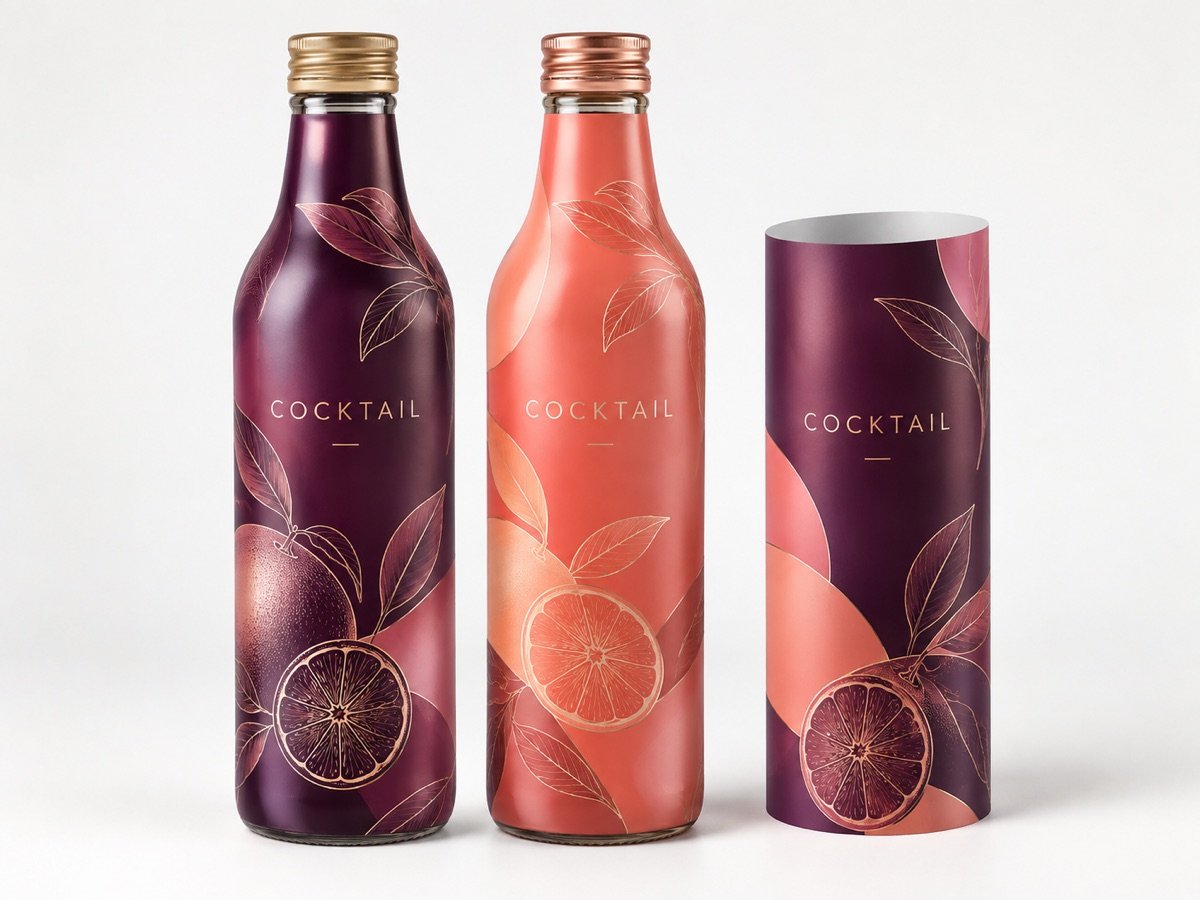
Reviewing both the flat sleeve and the applied result helps the converter assess coverage, seam position, graphic placement, and shrink demand.
2. Consider the Shrink Tunnel and Application Line
Film selection and equipment selection are connected. Steam, hot-air, and infrared tunnels transfer heat differently. Conveyor speed, tunnel zones, airflow, steam distribution, container material, product fill temperature, and sleeve position all influence the result.
PVC can perform well at comparatively gentle processing conditions, which is one reason it remains common on established lines. PETG grades may need more precise heat distribution and tunnel control, particularly on containers with strong diameter changes. This does not mean PETG is unsuitable for high-speed production; it means the film, container, and tunnel recipe should be validated as one system.
Before confirming a material, tell the supplier:
- whether the sleeves will be applied manually or automatically;
- the type and model of shrink tunnel, if known;
- the normal conveyor speed and available heating zones;
- the container material and wall thickness;
- whether the container is empty or filled during shrinking;
- the filling temperature and sensitivity of the packed product; and
- any current sleeve material already running successfully on the line.
If the project is new, request a fit sample or production-line trial before mass production.
3. Evaluate Print Quality and Artwork Distortion
Both PETG and PVC can be printed by gravure, flexographic, offset, or digital processes when the film and ink system are compatible. The best printing method depends on order quantity, number of designs, color requirements, repeat orders, and cost target.
Shrink sleeve artwork is normally printed in a distorted form so that the graphics appear correct after the film conforms to the container. Areas with high shrink demand—often shoulders, necks, corners, and recessed sections—require more careful distortion control. Text, barcodes, logos, faces, and fine lines should be kept away from the most unstable zones whenever possible.
The distortion template should be prepared only after the final container, sleeve coverage, layflat width, cut height, seam position, and film grade have been confirmed. Changing from PVC to PETG after artwork approval may require a new technical review because the shrink curves can differ.

A properly specified sleeve should follow the container profile while keeping important graphics clear and correctly positioned.
4. Compare Handling, Storage, and Production Risk
Printed sleeves pass through several stages before reaching the consumer: printing, curing, slitting, seaming, inspection, packing, transport, storage, application, and shrinking. Film behavior during each stage matters.
PETG is generally valued for toughness and a premium visual result. PVC can be easy to process on lines that have already been optimized for it. In both cases, poor storage or excessive heat can affect sleeve dimensions and application stability.
Keep finished sleeves in their original protective packaging and store them according to the converter’s recommendations. Avoid direct sunlight, high temperatures, moisture, crushing, and long storage near heat sources. Use a clear first-in, first-out system and allow material to acclimatize if it has been transported through very different temperature conditions.
5. Review Recycling and Market Requirements Early
Recycling compatibility depends on the complete package—not only the sleeve polymer. The bottle material, percentage of surface coverage, inks, coatings, adhesives, perforations, and local collection and sorting systems can all affect the outcome.
PVC is generally a concern in PET bottle recycling because even small amounts can be difficult for reclaimers to manage. Conventional PETG sleeves can also create challenges in some PET recycling processes. Newer crystallizable PET and other recycling-compatible shrink sleeve technologies are available, but their suitability depends on the bottle, ink system, regional design guidance, and independent testing.
Do not use a generic statement such as “PETG is recyclable” or “PVC is recyclable” as the sole basis for a packaging claim. Ask the brand owner or importer which recycling protocol applies in the destination market. For high-coverage sleeves, verify whether sortation, wash-off, float/sink, perforation, or label-removal testing is required.
If recycling compatibility is a key project target, state it at the quotation stage. The converter can then review suitable film options and identify information that must be confirmed with the film supplier or testing body.
6. Compare Total Project Cost, Not Film Price Alone
PVC is often selected for cost-sensitive, established applications, while PETG may carry a higher material cost. However, film price is only one part of the total project cost.
Also consider:
- the number of trial runs required;
- tunnel adjustments and line downtime;
- rejected sleeves caused by wrinkles or poor registration;
- sleeve thickness and material yield;
- printing method and cylinder or plate cost;
- order quantity and number of SKUs;
- packing and freight volume;
- compliance testing; and
- the cost of changing material after artwork approval.
A film that is slightly more expensive per kilogram may still be the better commercial choice if it produces stable results on a difficult container. Conversely, a proven PVC specification may remain practical for a straightforward project where the destination market and customer requirements permit it.
When Should You Consider PETG?
PETG may be a strong candidate when:
- the container has a narrow neck, steep shoulder, or large change in circumference;
- high clarity and premium shelf appearance are important;
- the application requires a medium- or high-shrink film grade;
- toughness during handling is a priority;
- the shrink tunnel can be controlled and validated for the selected grade; or
- the customer requires a PET-based material option, subject to recycling review.
When Should You Consider PVC?
PVC may be considered when:
- the container is cylindrical or only moderately contoured;
- the existing application line is already validated for PVC;
- the project needs an established, cost-conscious material option;
- gentle shrink conditions are beneficial for the package or product;
- the sleeve is used for a tamper-evident band, promotional pack, or other established application; and
- the destination market, brand owner, and recycling requirements allow its use.
For a PVC project, review our PVC shrink sleeve labels page for the container and artwork information needed for quotation.
Information to Send for a Film Recommendation
For a useful technical review and quotation, send:
- the actual container or an accurate production drawing;
- container material and product application;
- sleeve coverage area and measurements in millimeters;
- clear front, side, top, and bottom photographs;
- required quantity and number of designs;
- printing and finish requirements;
- current film specification, if replacing an existing sleeve;
- shrink tunnel type and production speed, if known;
- destination country and relevant compliance requirements;
- recycling or material restrictions from the brand owner; and
- required sample and delivery dates.
Final Recommendation
PETG and PVC can both produce attractive, functional shrink sleeve labels when the film grade, container, artwork, and shrink process are correctly matched. PETG is often evaluated for demanding contours and premium presentation, while PVC remains a practical choice for many established and cost-sensitive applications. Neither material is universally better.
The safest purchasing decision is to define the container and line conditions first, compare suitable film grades, and approve a physical shrink test before mass production.
Contact Haosen Packaging and send your container photographs, dimensions, quantity, artwork status, application method, destination market, and delivery requirements. Our team can review the project and recommend the next sampling step for your custom shrink sleeve labels.
Reviewed for technical wording. Final film selection remains subject to the selected film manufacturer’s data, production trials, and destination-market requirements.