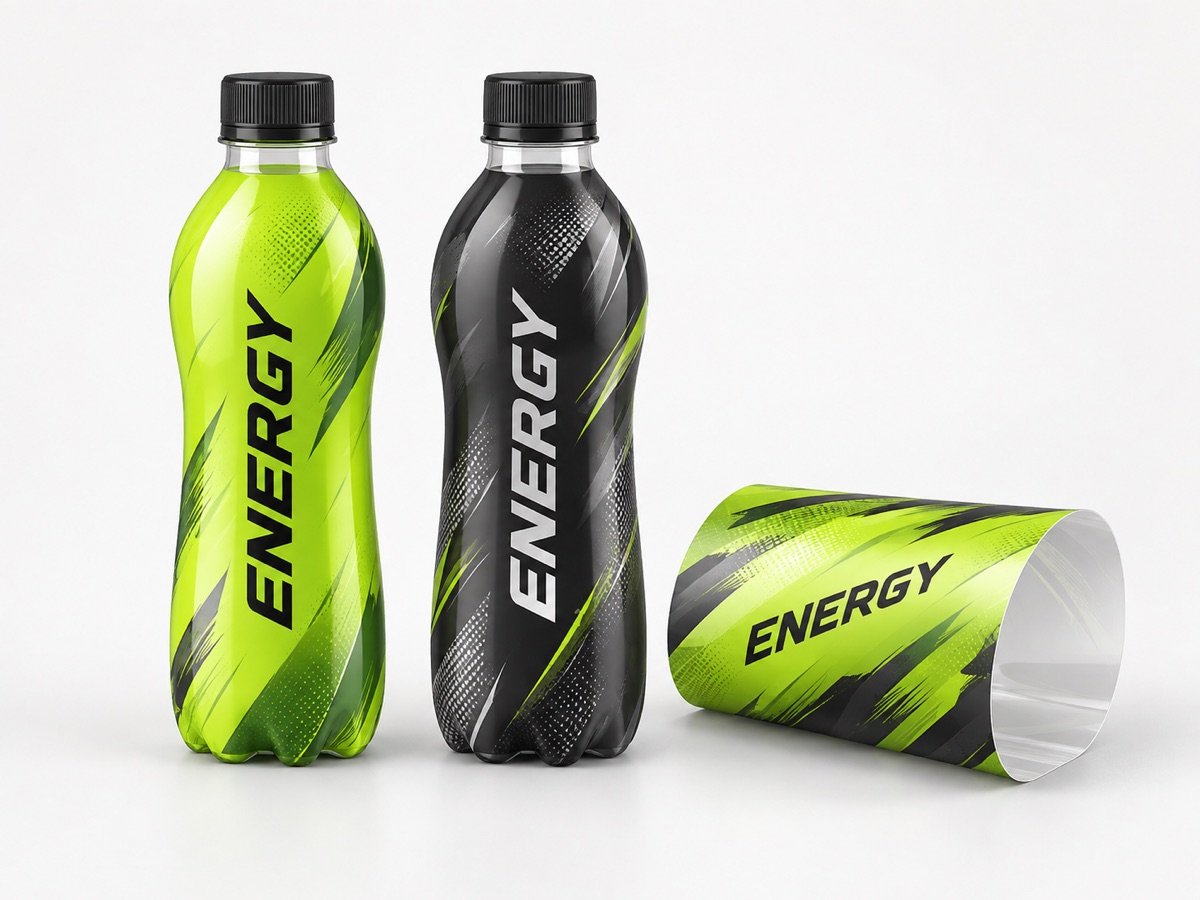
Custom shrink sleeve projects can involve different container shapes, materials, artwork versions and order quantities.
When sourcing custom packaging, buyers often ask one question first: What is the minimum order quantity for shrink sleeve labels?
There is no single MOQ that applies to every shrink sleeve project. The practical minimum depends on the printing method, film specification, sleeve dimensions, artwork, number of SKUs, finishing requirements and production setup. A quantity that is economical for one bottle may not be suitable for another.
Understanding these variables helps you request a more accurate quotation, compare suppliers fairly and avoid choosing a low unit price that does not match your actual application.
What Does Shrink Sleeve Label MOQ Mean?
MOQ means minimum order quantity. For shrink sleeve labels, it is normally the smallest production quantity a supplier can manufacture efficiently for a defined specification and artwork.
The key phrase is “defined specification.” A quotation is not based only on the total number of sleeves. It may also depend on:
- Quantity per design or SKU
- Layflat width and cut height
- Film type and thickness
- Printing method and number of colors
- Finishing format, such as rolls or individual cut sleeves
- Inspection, packing and delivery requirements
For this reason, buyers should not assume that 20,000 sleeves split across five designs will be priced the same as 20,000 sleeves with one design.
Why Do Shrink Sleeve Orders Have a Minimum Quantity?
Shrink sleeve production includes several fixed preparation steps before stable mass production begins. These can include artwork preflight, color separation, printing setup, film preparation, press adjustment, ink matching, slitting, seaming, cutting, inspection and packing.
Some setup work is required whether the order is small or large. When the volume is very low, these fixed costs are divided across fewer sleeves, so the unit price rises sharply. The MOQ helps balance setup cost, material usage and production efficiency.
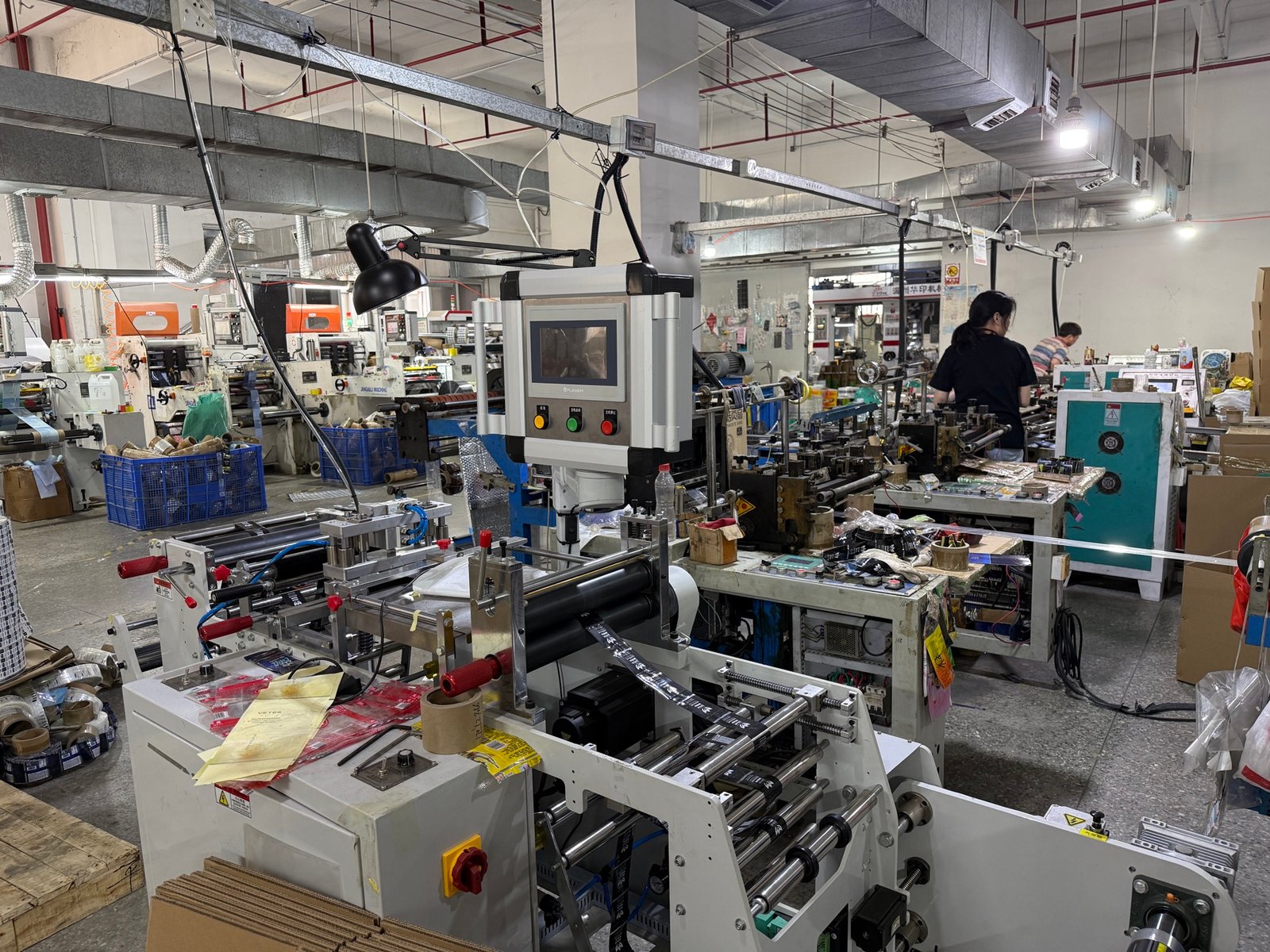
The post-press workshop handles downstream converting operations after printing. These production steps also contribute to the practical MOQ of a shrink sleeve project.
Seven Factors That Affect Shrink Sleeve Label MOQ
1. Printing Method
The suitable printing process depends on the job. Digital printing can be useful for short runs, multiple versions and projects with frequent artwork changes. Conventional processes may become more economical at larger volumes but can require additional setup, such as printing cylinders or plates.
The best option should be evaluated using the required quantity, artwork, color expectations and repeat-order plan—not quantity alone.
2. Film Material and Thickness
Shrink sleeves may use materials such as PETG or PVC, depending on the container, shrink performance, application equipment and market requirements. Film thickness and available stock widths also affect material planning.
A commonly stocked specification may support a lower practical quantity than a special film that must be purchased or produced separately. Buyers should confirm the material rather than comparing quotes that use different films.
If the film has not been specified, read our PETG vs. PVC selection guide before requesting a project-specific material review.
3. Sleeve Dimensions
Layflat width and cut height determine how much film each sleeve consumes and how efficiently the job can be arranged on the web. Small changes in dimensions may affect material yield, tooling and production layout.
Before requesting a quotation, provide accurate measurements or send physical containers for evaluation. See our guide: How to Measure a Container for Custom Shrink Sleeve Labels.
4. Artwork, Colors and Special Effects
Artwork complexity can influence prepress, color matching and press setup. Metallic effects, matte or gloss finishes, special inks, opaque white layers and strict brand-color requirements may add production steps.
A clear final artwork file usually produces a more reliable MOQ and cost estimate than an unfinished design that may change after quotation.
5. Number of Designs or SKUs
MOQ is often evaluated per artwork or per SKU, not simply by the combined order quantity. Each design may require separate files, color control, setup and inspection.
If several SKUs use the same sleeve size, film and printing requirements, tell the supplier. Compatible designs may sometimes be planned more efficiently, although this depends on the printing route and production layout.
6. Container Shape and Shrink Performance
Straight-sided bottles are generally easier to evaluate than highly contoured containers. Bottles with shoulders, waists, handles or large diameter changes may need additional distortion work and shrink testing.
A trial is especially important when the sleeve must align precisely around caps, tamper-evident areas, windows or complex curves. Sampling and testing help confirm fit, but they are different from a full production MOQ.
7. Finishing, Packing and Delivery
Shrink sleeves can be supplied in rolls or as individual cut pieces. Roll direction, core size, perforation, seaming requirements, packing quantity and export-carton specifications can all affect production planning.
Urgent delivery can also limit the most economical production arrangement. If timing is flexible, the supplier may have more options for scheduling compatible jobs and materials.
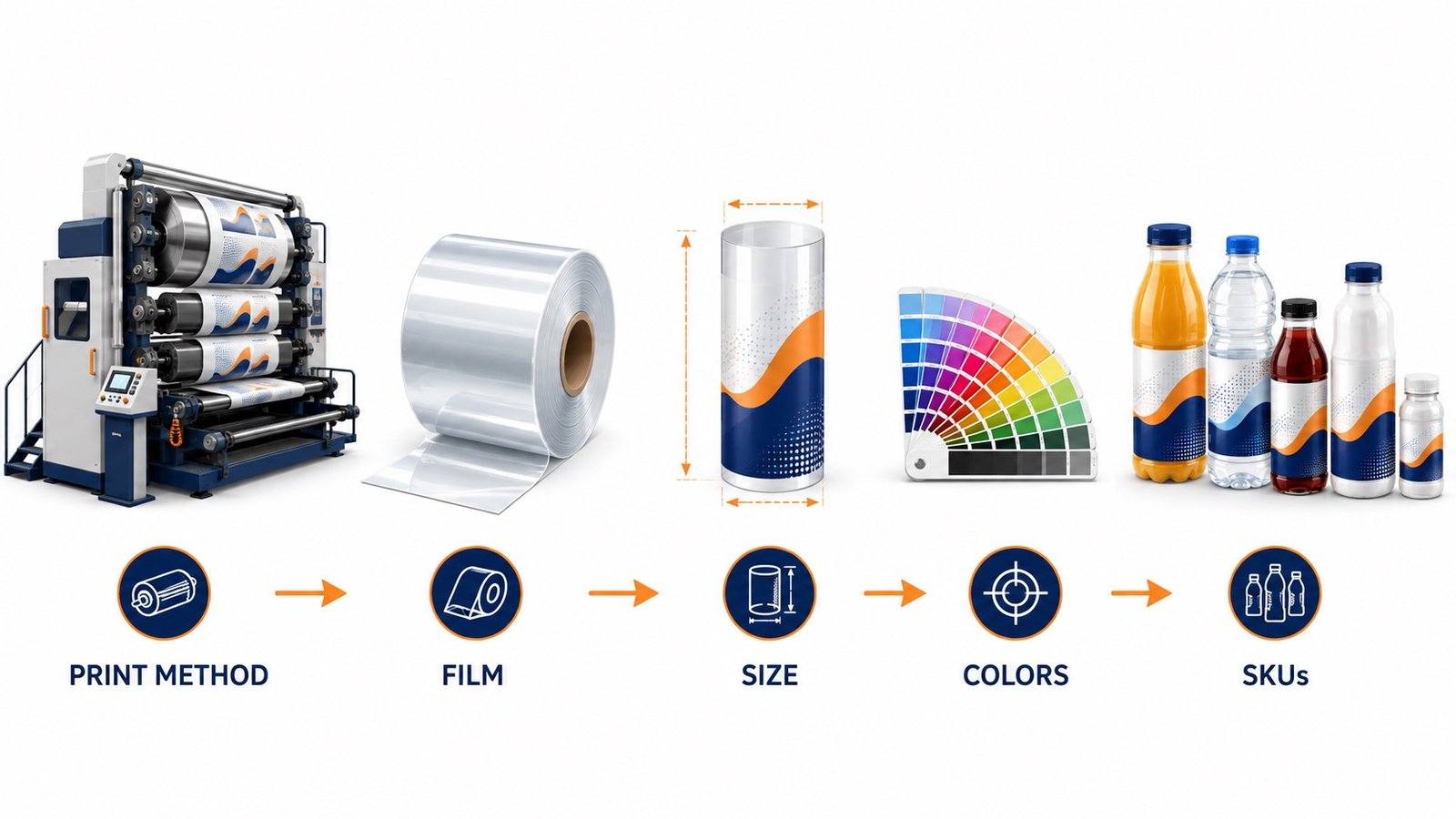
Printing method, film, sleeve size, color requirements and the number of SKUs are core inputs for MOQ evaluation.
Is MOQ Calculated Per Order or Per Design?
In many projects, MOQ is calculated per design because each SKU has its own artwork and production controls. However, the exact rule depends on whether the designs share compatible specifications.
For example, five designs with identical material, thickness, layflat width, cut height and finishing may be easier to combine than five designs using different bottle sizes and films. Even when specifications match, combining artwork is not always technically or economically suitable.
When requesting a quote, list the required quantity for every SKU instead of providing only one total number.
Can You Order Below the Standard MOQ?
Sometimes, but it depends on the project. Possible options may include:
- Using a short-run printing method
- Selecting a stocked film specification
- Standardizing sleeve dimensions across several SKUs
- Paying a separate setup charge for a very small production run
- Ordering a prototype or test sample before mass production
These options are not guaranteed for every product. A supplier still needs to review the container, artwork, performance requirements and requested quantity.
Be cautious when comparing an unusually low MOQ. Confirm whether the quotation includes production-quality printing, seaming, cutting, packing and the required material. A sample quantity and a commercial production quantity are not the same thing.
How Can Buyers Reduce MOQ Pressure and Total Cost?
The goal is not always to find the lowest possible MOQ. It is to find a quantity that protects cash flow while maintaining reliable quality and a sensible landed cost.
The following actions can help:
- Standardize specifications. Use the same film, thickness and sleeve size across compatible SKUs where possible.
- Finalize artwork before quotation. Late changes can require new prepress work or production setup.
- Provide quantity by SKU. This allows the supplier to evaluate whether designs can share a production plan.
- Avoid unnecessary special finishes. Use them where they add real shelf value, not by default.
- Plan repeat orders. Share your expected annual volume and ordering frequency, not only the first trial quantity.
- Allow realistic lead time. Flexible scheduling may improve production efficiency.
- Test the container early. Confirming dimensions and shrink behavior helps prevent costly revisions later.
What Information Should You Send for an Accurate Quote?
To receive a useful MOQ recommendation and quotation, prepare the following:
- Clear photos of the container from multiple angles
- Container drawing or physical sample, if available
- Layflat width and cut height
- Film preference, such as PETG or PVC, if already specified
- Film thickness requirement, if known
- Quantity required for each SKU
- Final or draft artwork files
- Color and finish requirements
- Roll or individual-piece delivery format
- Application method and shrink-tunnel information
- Delivery destination and target deadline
If you are unsure about the material or dimensions, describe the application and ask for a technical review. Our Custom Printing and Factory pages explain the production support available for custom packaging projects.
Sample Approval Is Not the Same as Production MOQ
A digital proof, blank fit sample or printed prototype can answer different questions:
- Does the artwork contain the correct information?
- Does the sleeve fit the container?
- Does the design distort correctly after shrinking?
- Are the colors and finish acceptable?
These samples are valuable risk-control steps, but their price and production route may differ from mass production. Ask the supplier to separate sample charges, setup charges and production pricing in the quotation.
Request a Project-Specific MOQ Review
The most reliable MOQ is based on your actual container, artwork and SKU plan. Haosen Packaging supplies custom shrink sleeve labels for different product categories and can review the suitable material, dimensions, printing route and finishing format for your project.
Contact us for a quotation and include your container photos, required quantity per SKU, dimensions, artwork status and delivery destination. We will evaluate the specification and provide a project-specific recommendation.