
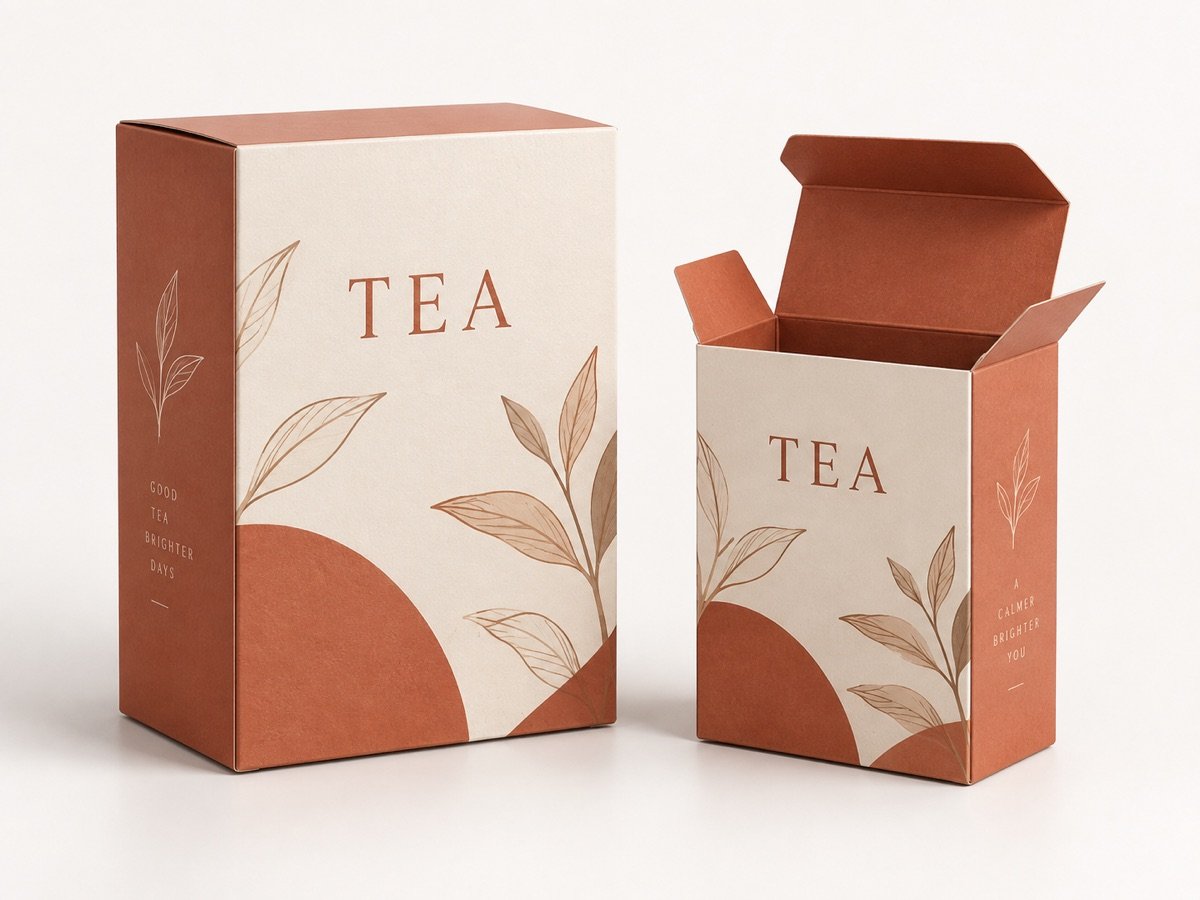
The correct paperboard specification depends on the product, carton structure, printing requirements and distribution conditions—not thickness alone.
Paperboard thickness is one of the first specifications buyers ask about when sourcing custom folding cartons. A thicker board may feel more rigid, but choosing the highest grammage does not automatically produce the best box. It may increase material cost, affect folding performance and create unnecessary problems during die-cutting or folder-gluing.
The practical goal is to select a board grade and caliper that protect the product, run reliably during production and deliver the required shelf appearance. This guide explains the information a packaging supplier needs before recommending a specification.
Paperboard GSM and Caliper Are Not the Same
Paperboard is often described by grammage, measured in grams per square metre (GSM), and by caliper, the physical thickness of the sheet. These two values are related, but they are not interchangeable.
Two paperboards with the same GSM can have different thickness, stiffness, density, surface smoothness and folding behaviour because they use different fibres and manufacturing processes. A high-bulk board may be thicker at the same grammage, while a denser grade may be thinner but still provide good strength.
For accurate sourcing, ask the supplier to confirm:
- Board type and grade
- Grammage in GSM
- Nominal caliper or thickness
- Grain direction
- Surface and reverse-side appearance
- Suitability for the planned printing and finishing process
Do not approve a production material using GSM alone when carton stiffness, product fit or shelf presentation is important.
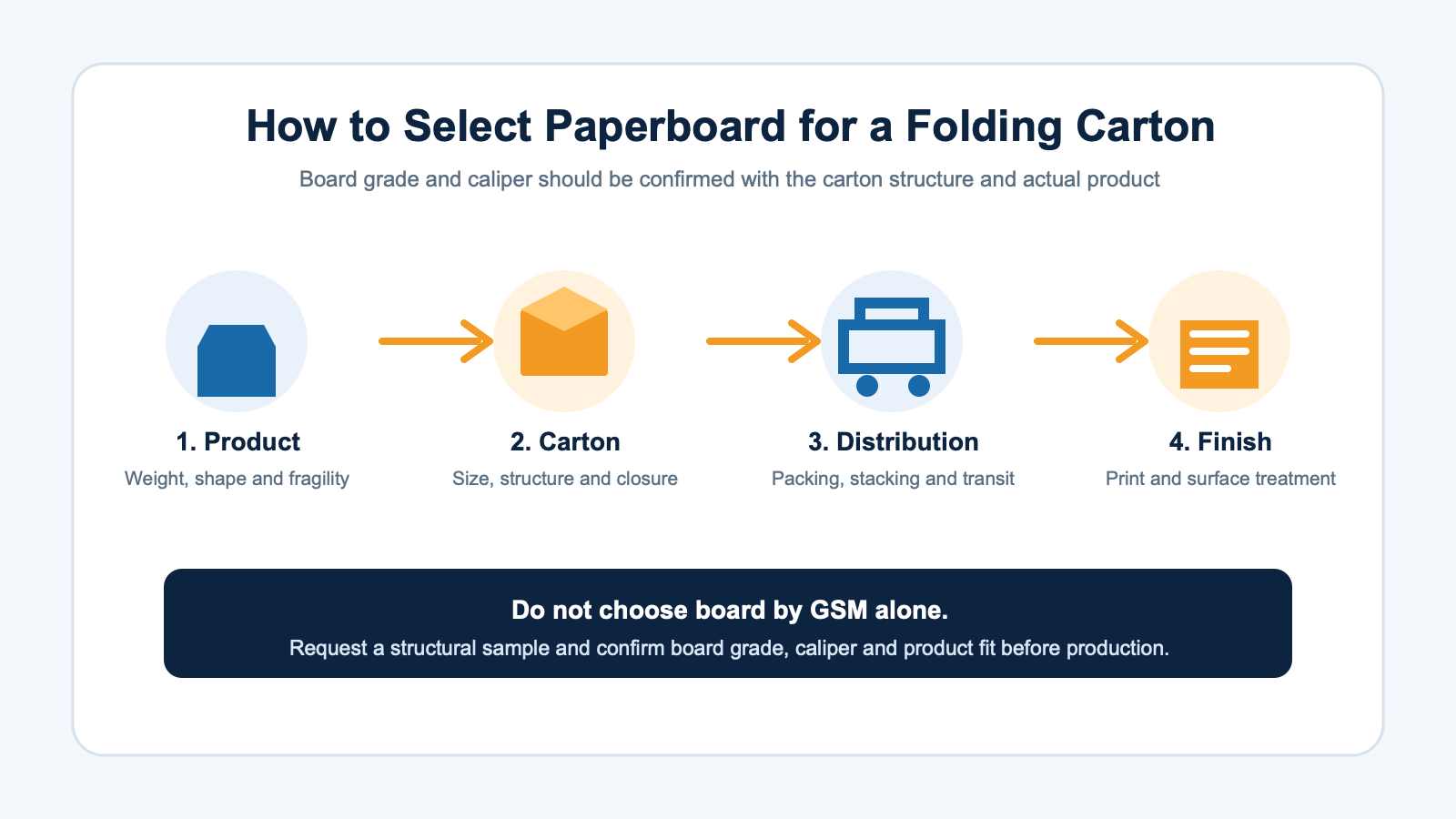
Product weight, carton structure, distribution conditions and finishing requirements should be reviewed together.
Common Paperboard Options for Folding Cartons
The correct grade depends on the application and local material availability. Common categories include:
Solid Bleached Board
Solid bleached board provides a clean white surface and is often considered for cosmetics, personal-care products, healthcare packaging and other applications where print quality and presentation are important. The reverse side may also be white, depending on the grade.
Folding Boxboard
Folding boxboard is designed to combine stiffness with relatively low weight. It can be suitable for many retail cartons, but the exact surface, bulk and reverse-side colour vary by grade and mill.
Coated Recycled Board
Coated recycled board can offer a cost-effective option for suitable retail applications. Its appearance, stiffness and recycled-fibre content vary, so the material should be reviewed against the product and branding requirements.
Kraft Board
Kraft board provides a natural brown appearance and is often selected when the visual direction calls for an unbleached look. Printing colour, white ink requirements and surface consistency should be evaluated before approval.
Material names are not complete specifications. The supplier should still confirm the exact grade, GSM, caliper and approved sample for the order.
Six Factors That Determine the Required Board Thickness
1. Product Weight and Fragility
A lightweight tube, sachet or small bottle may not require the same stiffness as a heavier glass container. Fragile products also need an assessment of movement inside the carton, closure security and whether an insert or other support is required.
Provide the actual product weight and a physical sample where possible. The carton should be evaluated with the product inside rather than as an empty box only.
2. Carton Size and Structure
Larger panels are more likely to bow or flex than smaller panels made from the same board. Box style, tuck direction, locking tabs, glue areas, windows and openings all affect structural performance.
Before quotation, send the product dimensions and state whether they are product dimensions, internal box dimensions or external box dimensions. If a dieline already exists, identify the opening and closure method.
3. Product Fit and Internal Clearance
Changing board caliper can change internal space, folding allowance and closure fit. This matters when the carton closely surrounds a bottle, jar, tube or device.
A dieline should not be finalized using only a photograph or nominal product capacity. The product dimensions, board specification, crease design and physical sample need to be checked together.
4. Printing and Surface Requirements
The board surface affects colour reproduction, fine text, barcodes and image detail. Special visual requirements may also influence the preferred grade.
Send final or near-final artwork and identify brand-colour references, inside printing and any requested surface effect. Foil stamping, embossing, spot UV, lamination and other special finishes should be confirmed for feasibility rather than assumed to be standard.
5. Packing, Stacking and Transport
A folding carton is usually part of a larger packing system. Inner packs, master cartons, stacking height, palletization, shipping distance, humidity and handling conditions can all influence the required performance.
The retail carton alone should not be expected to perform as a shipping carton unless it has been designed and tested for that purpose. Explain how the finished boxes will be packed and transported.
6. Filling and Packing Method
Manual packing and automatic cartoning can place different demands on dimensional consistency, crease quality and opening performance. If the cartons will run on automatic equipment, provide the machine requirements and packing direction.
Is There a Standard GSM for Every Product?
No single GSM is correct for every carton. Buyers may encounter specifications such as 250, 300, 350 or 400 GSM, but these figures should be treated as discussion points—not universal recommendations.
The same nominal GSM can perform differently across board grades. A smaller carton for a lightweight product may work with a lower grammage, while a large carton or heavier product may require higher stiffness, a different board grade or a revised structure. In some projects, improving the carton design is more effective than simply increasing GSM.
For this reason, Haosen Packaging confirms the production specification after reviewing the product, dimensions, intended use and artwork. Board grade, thickness, tolerances and special finishes are agreed during quotation and sampling.
Why a Structural Sample Matters
A structural sample can reveal issues that are difficult to judge from a drawing alone:
- Whether the product fits without excessive movement
- Whether the top and bottom closures hold correctly
- Whether the carton opens and folds cleanly
- Whether the main panels remain sufficiently flat
- Whether glue areas, tabs and creases function as intended
- Whether text, barcodes and graphics fall on the correct panels
A blank structural sample checks fit and construction. A printed proof checks artwork and appearance. These samples answer different questions, and neither should be confused with full production approval.
Information to Send for a Reliable Recommendation
Prepare the following information when requesting a custom paper box quotation:
- Product length × width × height, with units
- Product weight and number of items per box
- Product photos or physical sample
- Required box style or an existing carton sample
- Required quantity for each design or SKU
- Artwork or dieline status
- Printing colours and surface requirements
- Inside-printing requirements, if any
- Packing method and delivery destination
- Target delivery date
If the structure is not final, send the product information first. Our custom printed paper boxes page explains the quotation inputs, while the Custom Printing page outlines the production workflow.
Paperboard Selection Checklist
Before approving the order, confirm the following in writing:
- Exact board grade, GSM and nominal caliper
- Approved carton dimensions and dieline version
- Product fit and closure performance
- Printing colours and panel orientation
- Grain direction where relevant
- Requested surface treatment and feasibility
- Packing quantity and master-carton requirements
- Inspection criteria and approved sample
These checks are more reliable than choosing a board based only on a general thickness recommendation.
Request a Custom Folding Carton Review
Haosen Packaging supplies custom printed folding cartons and supports printing, die-cutting and folder-gluing according to the approved design. Our Factory page shows the production environment and confirmed equipment scope.
Contact us for a paper box quotation and include your product dimensions, weight, box style, quantity, artwork and delivery destination. We will review the structure and recommend a project-specific board specification for confirmation.